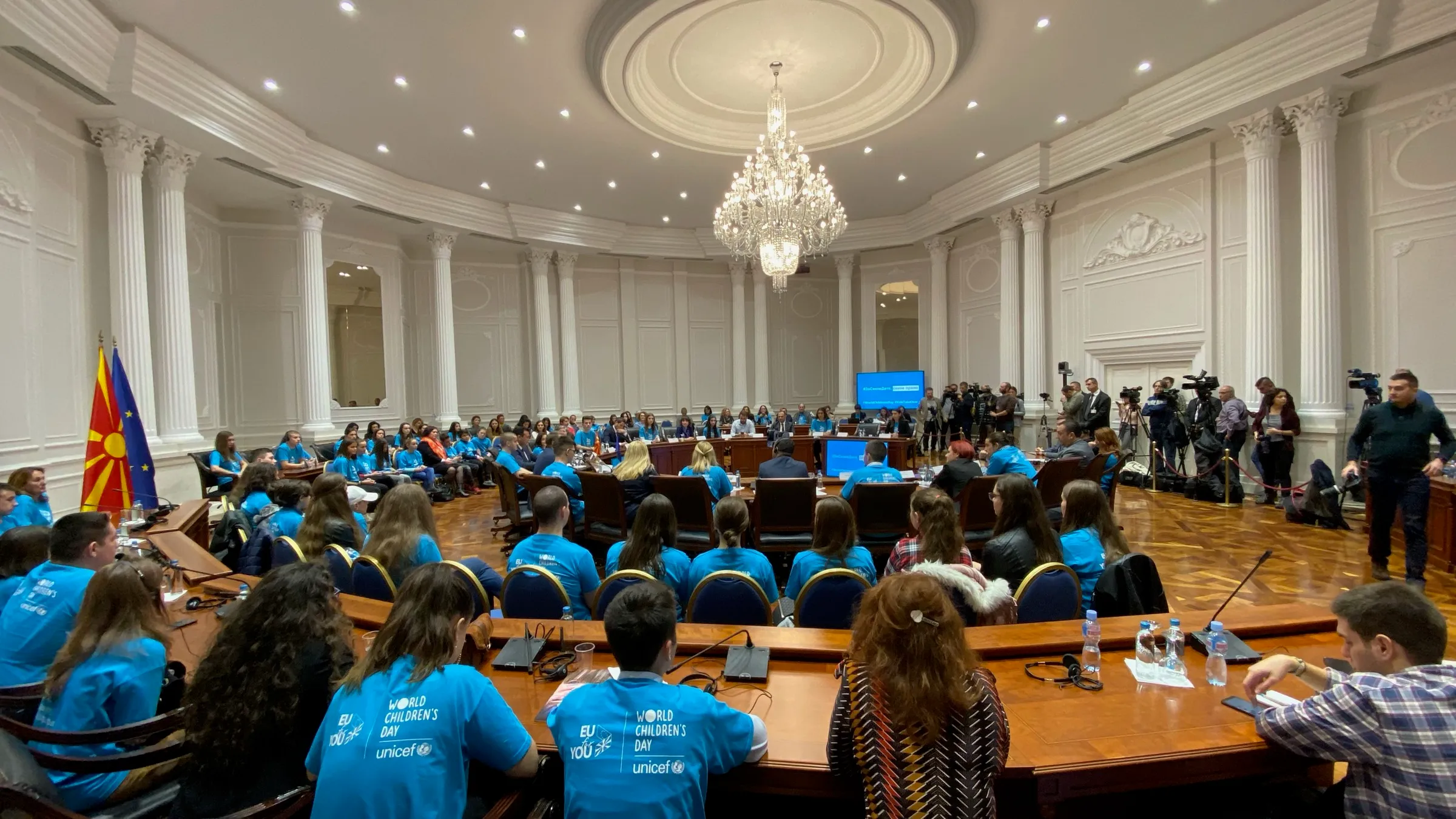
From 2014 to 2021 I led UNICEF North Macedonia’s social policy and social protection portfolio, working with the Ministry of Labour and Social Policy, the Institute for Social Activities, the Ministry of Finance and parliament on a reform agenda that spanned legislation, child benefit design and disability assessment methodology. The three most consequential strands are below.
What I did
Social protection legislation. I provided sustained technical assistance through the drafting of the Law on Social Protection (2019) and the Law on Child Protection (2019), which together consolidated previously fragmented programmes into an income-tested architecture anchored by a new Guaranteed Minimum Assistance (GMA). Alongside the cash-benefit overhaul, the reform introduced a new community-based social services architecture (with non-state providers under state quality oversight) and case management as the linking mechanism between clients and services.
Child benefit reform. Within the 2019 package, I supported the redesign of the child benefit architecture: a move from formally-employed-only eligibility toward income-tested coverage, the introduction of a new education allowance to cover school attendance costs in poor households, and a restructuring of the parental allowance (a pronatalist benefit that had been the costliest in the cash-benefit system but reached only about a quarter of the poorest decile; new applications were phased out while existing recipients kept their entitlements for the full ten-year award period). UNICEF’s design estimates projected that the redesigned child allowance would expand from around 8,000 to roughly 60,000 children, including a tenfold expansion for children living in poverty (from approximately 6,000–7,000 to about 60,000).
Disability assessment model for children. I designed a new disability assessment model for children, grounded in the WHO’s International Classification of Functioning (ICF) and its child and youth version (ICF-CY). The old “categorization” model was medical, deficit-focused and non-standardised; parents described it as labelling, and schools and kindergartens often couldn’t act on the outputs. The new model reframes assessment around what the child can do (potential, participation, environmental factors), and structurally embeds parents as members of the assessment body. The work spanned from concept in 2012 through implementation in 2018: a working group with an international expert team, five public debates, integration of ICF into Macedonian legislation in 2016, adoption of the implementing Rulebook in February 2017, and rollout through 2018 across nine regional assessment bodies and a central electronic registry.
Outcomes
By the end of the seven years: new primary and secondary social protection legislation (the 2019 Laws on Social Protection and Child Protection), a restructured income-tested cash-benefit architecture anchored on the GMA, a redesigned child allowance projected to reach roughly ten times more children living in poverty, a working ICF-based disability assessment model in force from 2018 across nine regional bodies, and a community-based social services architecture with case management as the linking mechanism.
The role also covered work outside the headline strands: COVID-19 impact analyses to inform policy responses; behavioural science approaches embedded in social work and employment facilitation; a partnership with Columbia University on case management methodology; and coordination of UNICEF’s response to the European refugee and migrant flow through Macedonia (SOPs for unaccompanied and separated children, vulnerability assessment for frontline staff).